Medical OSCES

Medical OSCES for medical students and PG Doctors

Menu
  • Home
  • Static Page
  • Radiology Cases
    • Neurology
    • Peadiactric
    • Chest
    • GIT
    • GUT
  • Radiology Notes
    • Neurology
    • Peadiactric
    • Chest
    • GIT
    • GUT
  • Lectures
    • Radiology
    • Anatomy
    • Physics
    • Radiography
  • Videos
  • Books
  • Surprise Me
Uncategories Stools

Stools


Meconium   

Stools

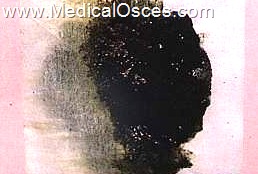
Slicky, tarry, greenish-black stool passed by the newborn infant within the first 48 h after birth. Failure !o pass meconium within 48 h of birth may indicate intestinal obstruction. Meconium is odorless and consists of mucus, epithelial debris and bile from the gastrointestinal tract before feeding. Meconium may be passed by the –fetus before birth if there- is fetal distress. Inhalation of meconium results  pneumonitis with severe respiratory distress, and vigorous suction and resuscitation are indicated immediately after delivery before the first spontaneous breath.


changing stool   
Stools

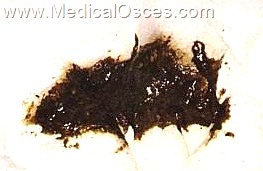
With the onset of feeding, the stools gradually change in colour and consistency  They become softer, greenish in colour and mixed with mucus for a few days.


Breastfed stools

Stools Breast-fed    Mustard yellow or greenish-yellow in colour and baby's stools    only a faint sweet of four. usually soft and semi-formed  but are sometimes liquid. Frequency varies, but they are Often passed after or during each feed.

Add Comment
  • Tweet
  • Share
  • Share
  • Share
  • Share

Related Posts

Post a Comment

Total Tayangan Laman

  • …

  • …

Weekly Posts

  • Adrenal adenoma
    Adrenal adenoma
    •Findings: –Large right adrenal lesion –Isointense to liver on in-phase scan –Hypointense to liver (signal loss) on out-of-phase scan ...
  • Diffuse Axonal Injury
    Diffuse Axonal Injury
    Findings: Diffuse brain swelling Focal punctate hemorrhage scattered in the white matter, corpus callosum, and brain stem Right subgaleal...
  • Name the arrowed structure ?
    Name the arrowed structure ?
    Left Ventricle
  • Anoxic Brain Injury
    Anoxic Brain Injury
    Findings: Hypodense cerebral hemispheres with effacement of cortical gyri Relative sparing of cerrebellum Due to global insult: Profoun...

Label

  • Cardiology (12)
  • Chest x-ray (9)
  • CT Scans (6)
  • Dermatology (56)
  • ECG (2)
  • Endocrinology (10)
  • ENT (2)
  • Gastroenterology (15)
  • Genetics (6)
  • Gyn and Obs (5)
  • gynaecology (4)
  • Haematology (17)
  • Image Challenge (214)
  • Immunology (3)
  • infectious and parasitic disease (3)
  • Infectious disease (5)
  • Instruments (1)
  • Microbiology (2)
  • Musculoskeletal (3)
  • NEJ Cases (9)
  • Nephrology (2)
  • Neurology (15)
  • oncology (3)
  • Ophthalmology (13)
  • Orthopaedic (8)
  • Parasitology (4)
  • Peadiactrics (12)
  • Pediatric EMCQ (1)
  • Pediatric EMCQs (5)
  • Pharmacology (4)
  • Pulmonology (9)
  • Radiology (30)
  • Real Cases (5)
  • Rheumatology (7)
  • Skull X-ray (2)
  • Surgery (4)
  • Vascular surgery (1)
  • x-ray (6)

Contact

Name

Email *

Message *

Copyright © 2014 Medical OSCES All Right Reserved
Blogger Templates Created by Arlina Design